Blog
Dental hygiene tips for healthy teeth & gums
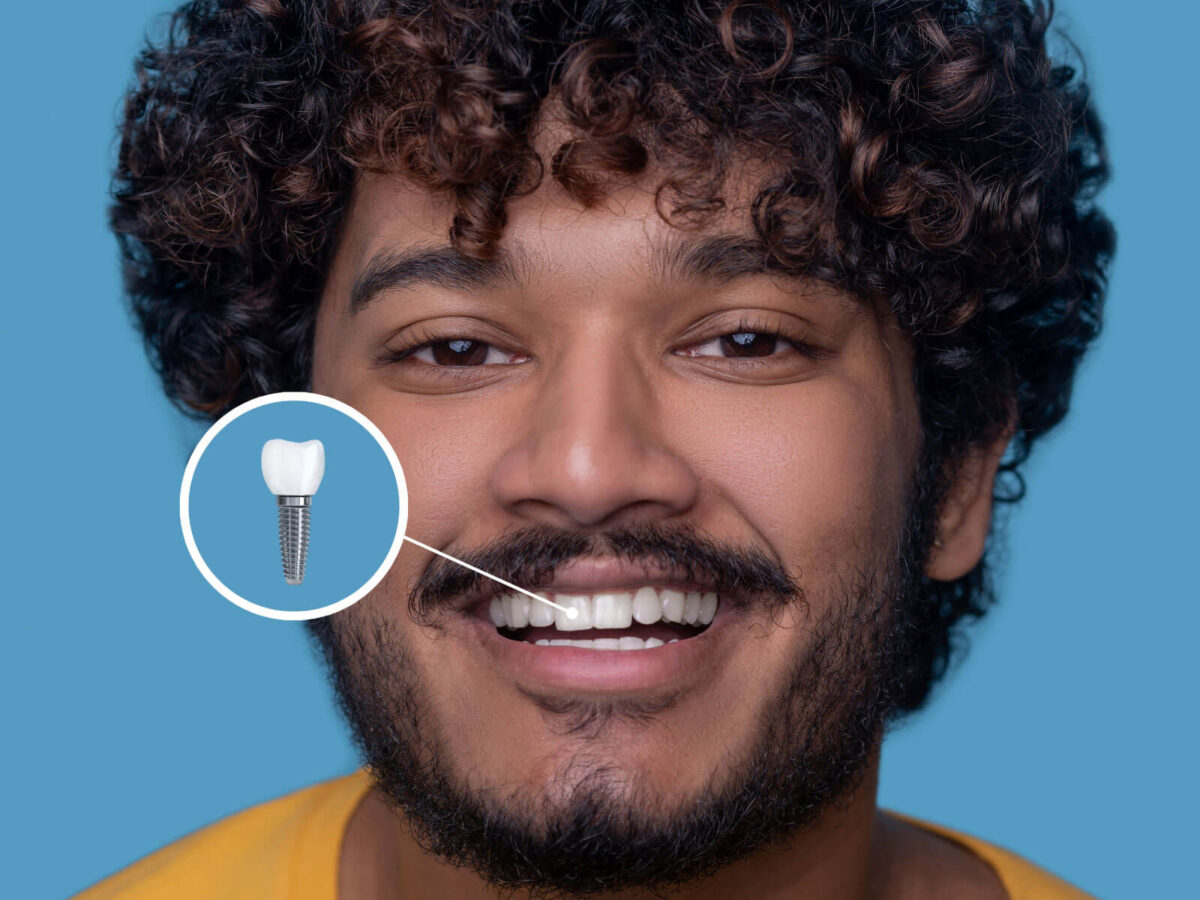
5 Types of Dental Implants Explained: Which One Fits You Best?
Patients come in having already decided. They’ve read about All-on-4, or a friend mentioned mini implants, or they found something online about same-day teeth. By the time they’re in the chair, they’ve got a preference.
That preference usually doesn’t survive the evaluation.
Types of dental implants aren’t a menu you order from. The implant that goes in your mouth is largely determined before the conversation about options even starts — by your bone volume, bone density, jaw anatomy, and in some cases your medical history. What I do at that first appointment is work backward from what your jaw can actually support.
That’s what most articles on this topic don’t tell you.
TL;DR
- Five types of dental implants worth knowing – endosteal, subperiosteal, mini, zygomatic, and implant-supported overdentures.
- Each one developed because standard implants don’t work for every jaw.
- The one you get isn’t really a preference. It’s what your bone and anatomy make possible.
- Knowing the options matters. What your jaw can support is what settles it.
1. Endosteal Implants: The Standard Against Which All Dental Implant Options Are Measured
Most patients come in with endosteal implants in mind without knowing that’s what they’re called. It’s the standard setup. Titanium post into the jawbone, a few months for it to bond, crown on top.
When there’s adequate bone volume and density, endosteal implants consistently outperform everything else on long-term outcomes. The American Academy of Implant Dentistry puts the success rate above 95% at ten years, which is a number most dental procedures don’t come close to.
The catch is that “adequate bone” is doing a lot of work in that sentence. Patients who’ve had missing teeth for a while often don’t have it. Bone resorbs without a tooth root to stimulate it, sometimes faster than people expect. A patient who waited two years after extraction before considering an implant may have already lost the volume needed for this option without a bone graft first.
That’s usually where the conversation goes. Not which type, but whether the bone is even there.
2. Subperiosteal Implants: When There Isn’t Enough Bone to Go Into
Subperiosteal implants don’t go into the jawbone. They sit on top of it, under the gum tissue, with metal posts that protrude through the gum to hold the prosthetic.
The reason this design exists is straightforward. Some patients don’t have enough bone for endosteal implants and either can’t do grafting or don’t want the additional treatment time. They were more common decades ago, before bone grafting techniques improved to the point where most patients became candidates for endosteal placement instead.
They still come up. Patients whose health makes healing complicated, or who don’t want the additional time a grafting approach adds, sometimes end up here instead. The outcomes aren’t as predictable as endosteal over the long term, and that’s worth being direct about.
For patients who otherwise wouldn’t have an implant option, this is the one that keeps it possible.
3. Mini Implants: Where the Most Misrepresentation Happens
Mini implants come up constantly in patient research, usually framed as a faster, cheaper alternative. The key difference is diameter. Under 3mm versus the standard 3.75mm or wider. That gap is smaller than it sounds and more significant than most patients realize going in.
The smaller diameter means less bone is needed for placement. They’re faster to place, often don’t require a healing period before loading, and cost less. That combination has made them popular in marketing. It’s also made them one of the more frequently oversold options I see patients arrive having already researched.
Mini implants have legitimate uses. Stabilizing a lower denture in a patient with significant bone loss. Serving as temporary anchors during orthodontic treatment. Replacing small teeth like lower incisors where a standard implant diameter simply won’t fit.
Where they don’t belong is as a budget substitute for a standard implant in a site that could support one. The evidence for long-term single-tooth replacement with mini implants in standard sites isn’t strong enough to justify that choice when the bone is there for a full-diameter post.
Which size goes in is a clinical call. It shouldn’t be a financial one.
Not Sure Which Implant Option Applies to Your Jaw?
The evaluation is what determines it — not the research.
4. Zygomatic Implants: The Most Specialized Option for Severe Bone Loss
Zygomatic implants don’t come up in most implant conversations because most practices don’t offer them. They’re anchored in the zygomatic bone, the cheekbone, rather than the jaw, and they exist for one specific situation: severe maxillary bone loss where there isn’t enough upper jaw left to support any other implant type.
It’s not a procedure most general practices offer. The surgical complexity is higher, the time in the chair is longer, and the recovery asks more of the patient than a standard implant case. A review published via NIH found survival rates above 95% for zygomatic implants over five years, which is reassuring given how advanced the cases that require them tend to be.
I mention them here because patients with severe upper jaw bone loss sometimes arrive convinced they’re not implant candidates at all. They’ve been told elsewhere that the bone isn’t there. That’s usually accurate for conventional types of teeth implants. It doesn’t always mean implants are off the table entirely.
5. Implant-Supported Overdentures: The Dental Implant Option That Changes What Dentures Can Do
By the time most patients ask about this option, they’ve already been through at least one conventional denture. They know what they’re tired of. The adhesive. The movement. The way it shifts on the worst possible bite. An implant-supported overdenture clips onto two to four implants. Still removable, but nothing like what they’ve been wearing.
This is the option that tends to change quality of life most noticeably for full-arch patients. The difference in daily function between the two is significant. Chewing efficiency improves considerably, and so does confidence in social situations. Patients don’t always bring that second part up directly, but it comes out once the overdenture is in place.
According to the American Dental Association, implant-supported prosthetics also help slow the bone resorption that conventional dentures accelerate by continuing to apply pressure to the jaw. That’s the long-term argument for them, beyond comfort.
For the lower arch, two implants are usually the minimum. The upper arch typically needs four because the bone density and anatomy work differently up there.
What Actually Determines Which Type You Get
Most implant articles don’t get to this part.
Bone volume is the first filter. A CBCT scan maps exactly how much bone is available in three dimensions and rules options in or out before anything else gets discussed. Bone density comes next. Two patients with identical volume can have very different timelines depending on how dense that bone actually is.
Systemic health matters too. Uncontrolled diabetes affects osseointegration. Some medications change how bone behaves around an implant. Bisphosphonates for osteoporosis are the ones that come up most in patient histories. A Cleveland Clinic resource notes that smoking reduces implant success rates considerably.
The right implant isn’t a preference. It’s whatever your jaw can support, and the evaluation is what figures that out.
FAQ
I keep seeing different implant names online – what are the actual options?
Endosteal is the standard. Subperiosteal and zygomatic are for when the bone isn’t there for standard placement. Mini implants cover smaller sites and denture stabilization. Overdentures handle full arch cases.
My dentist mentioned different implant options – do I get a say in which one?
Not much of one. The bone decides most of it. I work with what the jaw can support.
Are mini implants as good as regular implants?
Depends on the situation. For a lower denture or a small tooth, they work well. Using them as a budget alternative in a spot that could take a standard implant is a different question, and the evidence doesn’t support that call.
How long do dental implants last?
Endosteal implants are above 95% at ten years when placed in good bone. After that, it comes down to how well the patient maintains them and whether anything changes systemically, like blood sugar control or smoking habits.
Conclusion
Each of these five options developed because the standard approach didn’t work for everyone. Endosteal for solid bone. Subperiosteal when grafting isn’t viable. Mini for specific anatomical situations. Zygomatic for severe upper jaw loss. Overdentures for full-arch patients who need real stability.
What all five have in common is that the jaw dictates it. Not the preference, not the budget. I’ve had patients come in convinced they needed one thing and leave with a completely different plan because the scan said otherwise.
Understanding the different types of dental implants is a starting point. The evaluation is what gives Huffman patients an actual answer.
Find Out What Your Jaw Can Support
Get a proper implant evaluation before assuming which option is yours.