Blog
Dental hygiene tips for healthy teeth & gums
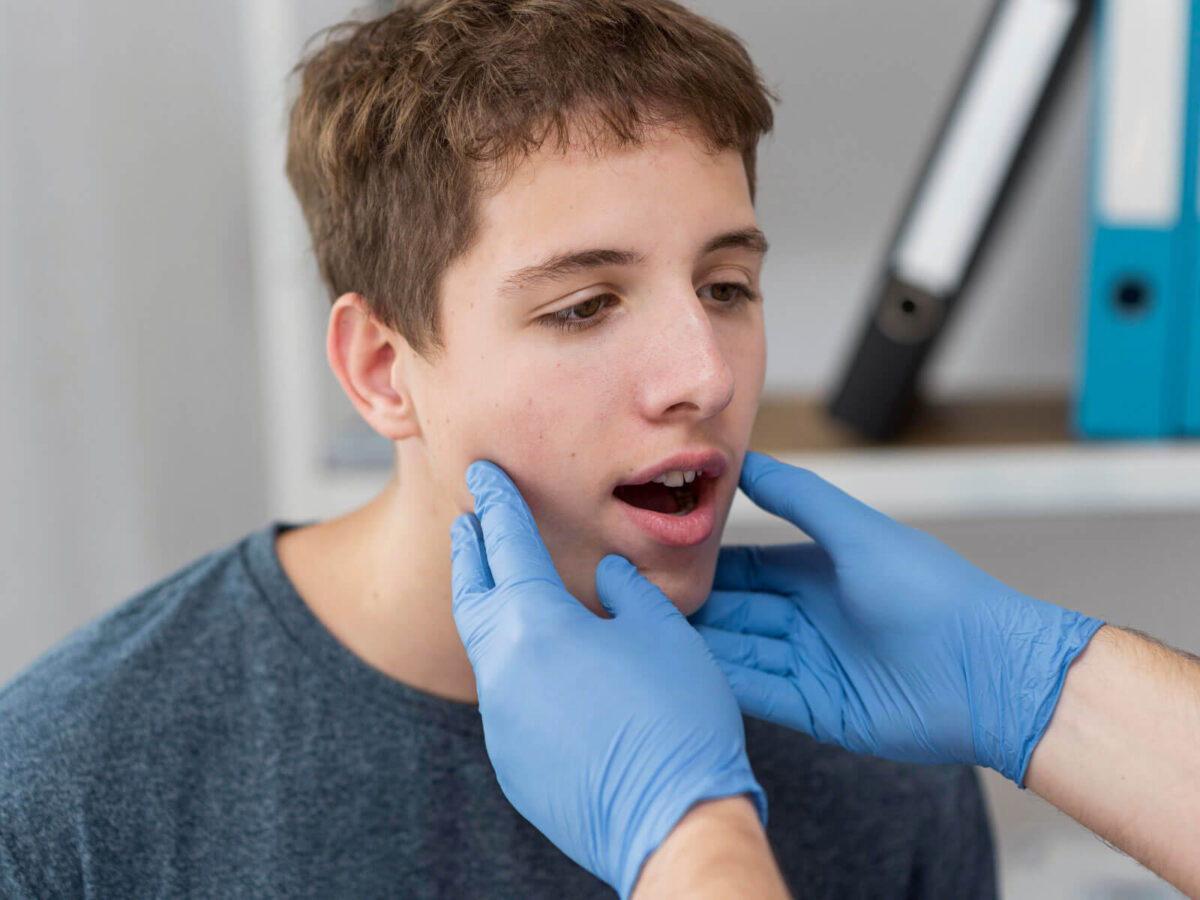
Jaw Misalignment: Causes, Symptoms & Treatment Options
A clicking jaw. Headaches with no clear reason. Teeth wearing down faster on one side than the other. Most people don’t connect any of it to their bite.
Jaw misalignment is often the quiet cause behind all of it. The upper and lower jaw don’t quite line up, and depending on how far off they are, it can be barely visible or obvious enough to change the shape of someone’s face.
The jaw doesn’t correct itself over time. A patient I’ve spoken with lived with headaches for almost three years. She saw a neurologist first. Nobody looked at her bite until a dentist noticed how unevenly her teeth had worn down.
There’s usually a reason the jaw ends up like this. Sometimes it’s genetics. Sometimes it’s a habit nobody thought twice about, like years of thumb sucking or grinding at night.
TL;DR
Jaw misalignment means the upper and lower jaw don’t line up right. Usually genetic. Sometimes from childhood habits, an old injury, or missing teeth left too long.
The signs aren’t always obvious. A clicking jaw is easy to notice. Headaches and jaw pain get blamed on other things more often than not. Mild cases often just need braces or aligners. Structural cases need jaw misalignment surgery, paired with orthodontics before and after.
Full breakdown below: causes, symptoms, and what correction looks like at each stage.
What Is Jaw Misalignment
Jaw misalignment covers a range of issues where the upper and lower jaw don’t meet correctly. Cleveland Clinic uses the broader term malocclusion for any bite where teeth and jaws don’t align properly. Jaw-level misalignment is one of the more significant forms that takes.
Skeletal misalignment means the jawbones themselves sit out of proportion or in the wrong position. Dental misalignment is different. Teeth crooked, jaw structure fine. Both affect the bite, but the fix looks nothing alike.
How Is It Different From TMJ Disorders
Jaw misalignment is about how the jawbones fit together structurally. TMJ disorders are something else. They involve the joint itself, the hinge connecting jaw to skull, and the muscles around it.
Misalignment can strain that joint through uneven pressure. Plenty of TMJ cases happen with a perfectly fine bite too, usually from grinding, clenching, or an old injury instead.
Mayo Clinic puts the number at roughly a third of adults dealing with some form of temporomandibular disorder at some point, with women at close to double the rate of men. Not every case traces back to misalignment. The overlap is big enough that dentists check bite alignment routinely when evaluating jaw pain anyway.
What Causes Jaw Misalignment
Genetics leads by a wide margin. Jaw size and shape run in families. Two parents with mismatched jaws tend to pass that mismatch on.
Childhood habits matter too. I’ve noticed it come up again and again with the same two things: thumb sucking that ran too long, mouth breathing instead of nose breathing. Nobody catches it in real time.
Injury is sudden. Genetics and habits aren’t. One hit to the face can undo a bite that was fine the day before.
Missing teeth cause drift too, just on a slower timeline. Leave a gap long enough, and the teeth around it start to move.
Posture rarely gets blamed, but it comes up. A jaw that juts forward. A chin propped on a hand for hours at a desk. Not a real cause by itself. More like one more thing stacked on top of everything else.
What Are Jaw Misalignment Symptoms
Jaw misalignment symptoms show up in more places than people expect. Jaw pain and stiffness are the obvious ones. Clicking or popping on opening the mouth is another common sign, sometimes painless, sometimes not.
Mayo Clinic lists difficulty chewing and aching pain around the ear among the common symptoms tied to jaw joint problems, along with pain that spreads into the face. A lot of that overlaps with what’s going on underneath, in the misalignment itself.
Headaches catch people off guard as a jaw symptom, particularly ones clustering around the temples. Uneven tooth wear is a quieter sign, the kind that shows up on one side more than the other because the bite isn’t spreading pressure evenly.
Facial asymmetry is the harder one. In more severe skeletal cases, it changes the shape of the face, and it’s often close friends or family who notice it first, not the person themselves. Speech changes happen occasionally too, less common, tied to how jaw position affects certain sounds.
When Should Someone See a Specialist
A woman I know ignored a locking jaw for the better part of a year. She figured it was stress, or just something that would work itself out. It didn’t. She ended up needing months of physical therapy before a dentist finally caught what was actually going on with her bite.
That’s really the pattern worth knowing. Occasional clicking with no pain isn’t usually something to worry about. But pain that sticks around, a jaw that locks up even briefly, or a bite that suddenly feels wrong for no clear reason, that’s different.
Cleveland Clinic’s guidance is to see a doctor or dentist when jaw pain persists or the jaw won’t fully open or close.
Waiting doesn’t tend to help. The earlier something gets looked at, whether it turns out to be misalignment or something else, the simpler it usually is to treat.
Wondering If Your Jaw Is Misaligned?
Get a real evaluation from a dentist or orthodontist. Find out what’s actually going on.
What Is Jaw Misalignment Correction Like
Jaw misalignment correction depends heavily on severity and whether the case is dental or skeletal at its root.
Braces or Clear Aligners. Milder cases, the ones rooted in tooth position instead of jawbone structure, often respond to orthodontics alone. No surgery, no appliances, just time and pressure moving teeth into place.
Dental Appliances. Expanders, retainers, and similar tools can guide jaw development in younger patients whose bones are still growing. I’ve seen a couple of these cases close to the source – kids who never needed anything more invasive because someone caught it early.
Physical Therapy. For cases driven more by muscle tension and joint strain than actual structural misalignment, targeted exercises and stretches help. Not a cure. Just relief, and sometimes that’s enough.
Jaw Surgery. Cleveland Clinic notes that orthognathic surgery is reserved for skeletal cases too significant for orthodontics alone to fix. It repositions the jawbone directly.
What Does Jaw Misalignment Surgery Involve
Jaw misalignment surgery, also called orthognathic surgery, runs as a two- to three-year process according to Cleveland Clinic, not a single event. Braces go on first to prepare the teeth. The surgery itself repositions the jaw. After that comes more time in braces, since the teeth need to settle once the jaw is done healing.
Several weeks – that’s the usual window before someone’s back to normal activity. The bone keeps settling for months after that. More than one patient has told me the swelling was worse to deal with than the actual pain.
Soft foods only at first, sometimes liquids. Regular food comes back slowly, in stages, as things heal. The orthodontist and oral surgeon end up working closely together through all of it. Two different specialists, one outcome.
FAQ
Is jaw misalignment always noticeable?
Not always. I’ve seen it get picked up on a routine X-ray in someone who had zero idea anything was off.
Can jaw misalignment cause headaches?
It can. Temple headaches especially, the kind people usually blame on stress first.
Does everyone with misalignment need surgery?
No. Plenty of cases never get anywhere near a surgeon. Braces alone handle a lot of it, especially when it’s caught young.
How long does jaw surgery recovery take?
A few weeks to get back to normal daily life. The full process, orthodontics included, can run closer to a year.
Is misalignment the same thing as a bite problem?
No, though people mix them up constantly. An overbite or underbite is one specific pattern. Misalignment is the bigger structural issue that can cause those patterns in the first place.
Can adults still get jaw misalignment correction?
Age doesn’t rule it out. The only real difference is a jaw that’s stopped growing, so treatment sometimes takes longer or needs surgery where a kid might’ve just needed braces.
Conclusion
I’ve talked to people who lived with jaw pain for years before anyone connected it to their bite. That’s usually how jaw misalignment goes. It hides behind headaches, clicking, teeth wearing down unevenly, symptoms that point everywhere except the actual cause.
Some cases stay minor forever. Others end up needing surgery. There’s no way to know which one you’re dealing with without an actual evaluation. A dentist or orthodontist can look at the bite directly and tell you what’s really happening, instead of guessing based on symptoms alone.
Ready to Get Your Jaw Evaluated?
Find out what’s causing your symptoms and how to fix them. One visit gets you real answers.