Blog
Dental hygiene tips for healthy teeth & gums
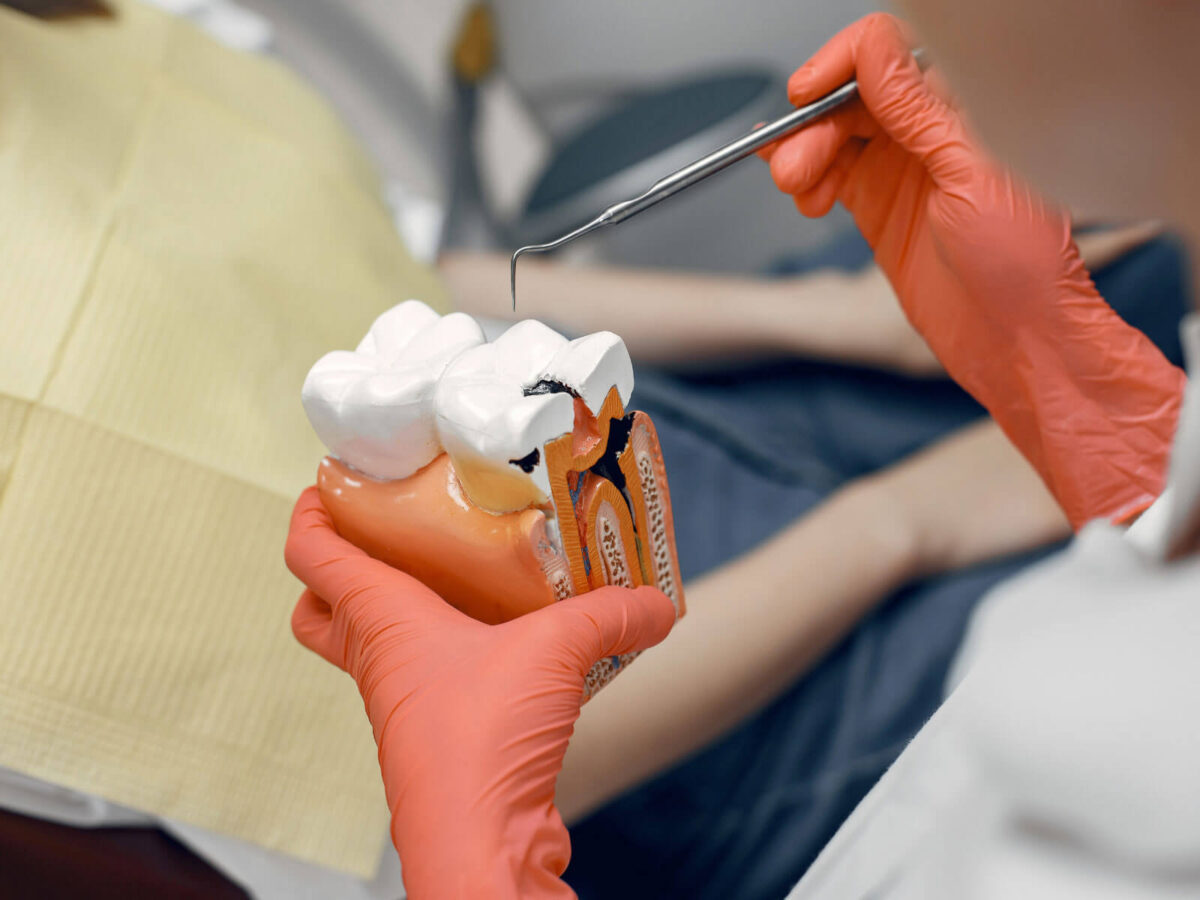
The 5 Stages of Tooth Decay and How Each Is Treated
I was thirteen when I lost my first tooth to decay. Not a baby tooth. A permanent one.
It started with sensitivity, cold water mostly. Nothing that felt serious enough to mention. Then a small brown spot showed up on the surface. I figured it was a stain. It wasn’t. Over the following months, that spot grew, darkened, and eventually became a hole I could feel with my tongue. By the time there was real pain, the infection had already set in. The tooth came out.
What I didn’t understand then was that every one of those moments was a stage. A point where the stages of tooth decay could have been interrupted. The sensitivity was a warning. The brown spot was a window. The hole was the window closing.
That sequence, quiet, then visible, then painful, then too late, is exactly how decay moves in most people.
TL;DR
- Five stages – demineralization, enamel decay, dentin decay, pulp infection, and abscess. Each one is harder to treat than the one before it.
- Early stages are reversible or minimally invasive to treat. By stage four, a root canal is usually necessary. Stage five means the infection has spread beyond the tooth.
- Pain doesn’t usually show up until stage three or four. By then, decay has already been working for a while.
Stage 1: Demineralization — The Beginning Stages of Tooth Decay Most People Miss
At this stage, patients feel nothing. There’s no hole, no sensitivity, no reason to suspect anything is happening. What’s actually occurring is invisible to the naked eye. Acid from bacterial activity and food strips minerals from the enamel surface in patches that only show up as chalky white spots under certain lighting or on an X-ray.
This is the one stage where the direction can actually be reversed. I tell patients at this stage to use a fluoride toothpaste consistently and cut back on acidic drinks. That’s often enough. The enamel can harden back up before a cavity actually forms, and no one has to pick up a drill. That window doesn’t exist at any other stage.
The ADA’s MouthHealthy resource backs this up. Catch it here, and there’s no drilling, no filling, no procedure at all.
Most people miss this stage entirely. There’s nothing that signals it.
Stage 2: Enamel Decay — Where Stages of Cavity Become Visible
The white spot darkens. Brown or black discoloration appears on the surface, which is what I noticed at thirteen and wrote off as a stain. It wasn’t. That color change means the enamel has started breaking down structurally.
At this point, a small cavity exists, but enamel has no nerve supply. There’s still no pain for most people. Maybe occasional mild sensitivity to sweet or cold, but nothing that interrupts a day.
A filling is all this needs. The area gets numbed, the decay comes out, and the space gets sealed. One appointment, and most patients leave without much to report.
The Cleveland Clinic notes that enamel cavities caught at this stage are among the most straightforward dental treatments available. At this stage, a straightforward filling is still all it takes.
Stage 3: Dentin Decay — When Tooth Decay Stages Start to Hurt
Getting through enamel takes time. Once decay reaches the dentin underneath, things move faster. Dentin is softer, and the decay spreads in all directions. It also has tiny channels that run directly to the nerve, which is why patients who felt nothing at stage two suddenly start noticing their teeth.
Cold becomes uncomfortable. Sweet foods can trigger a response. Some patients describe a brief, sharp pain that fades, and that fading matters because it means the nerve isn’t infected yet.
A filling is still the usual treatment here, though it’s a bigger one than stage two. If the decay has gone deep enough into the dentin, a crown may be needed afterward to hold the tooth together.
This is roughly where most people finally book the appointment.
Ready to Find Out Where Your Teeth Actually Stand?
Decay doesn’t wait. An exam shows what’s happening before the pain does.
Stage 4: Pulp Involvement — The Stages of Tooth Decay That Change the Treatment Entirely
When I think about that tooth I lost at thirteen, this is where things went wrong. The pain that showed up at this stage wasn’t like anything before it. It started at night, sat there constantly, and got worse when I lay down. By then, the decay had already reached the nerve.
At this stage, the nerve tissue has to come out. That’s the root canal. The inside of the tooth gets cleaned out, sealed, and then a crown goes on to protect what’s left.
Patients usually arrive convinced the root canal is going to be the worst part. The Mayo Clinic notes that modern root canal treatment is generally no more uncomfortable than a filling. What they’re remembering as painful is usually the infection they came in with, not the procedure.
Stage 5: Abscess — When Stages of Cavity Progression Become a Medical Issue
Mine got here. That’s the part I didn’t fully understand at thirteen. What I thought was a bad toothache had become an infection that had moved out of the tooth entirely and into the tissue around it. The jaw swelling came next. Then the fever. Over-the-counter painkillers stopped touching it.
I didn’t know until afterward that a dental abscess can spread to the jaw, neck, and the floor of the mouth. The NIH has documented cases where that happened, and patients ended up in the hospital. By the time mine was this far along, it wasn’t something I could have managed at home any longer.
Getting here means the infection has to be drained first, antibiotics started, and then the tooth gets dealt with. Suppose there’s enough left to save – a root canal. Suppose there isn’t – extraction. Mine came out. The infection cleared, but the tooth didn’t come back with it.
Why Decay Moves Through These Stages Faster Than People Expect
Some things speed up the progression in ways most patients aren’t aware of.
Dry mouth is one. Saliva neutralizes acid and remineralizes enamel passively throughout the day. Patients on medications that reduce saliva flow – antihistamines, antidepressants, blood pressure medications, among others – lose that buffer. Decay progresses faster in a dry environment.
Diet frequency matters more than diet content. Sipping a sugary drink over two hours exposes teeth to acid continuously. Drinking it in ten minutes gives saliva time to recover. The same total sugar intake produces very different decay patterns depending on how it’s consumed.
The stretch between the beginning stages of tooth decay and the first real pain is where most of the damage gets done. Nothing signals it. That’s the problem.
FAQ
What are the 5 stages of tooth decay?
Demineralization is first, then the cavity breaks through the enamel, then it reaches the dentin, then the pulp gets involved, and finally an abscess forms if nothing’s been done. I’ve seen patients at every point on that list. The earlier ones are much easier conversations.
Is tooth decay reversible?
Stage one only. Once a cavity actually forms, the tooth doesn’t fix itself. But at the very beginning, before there’s a hole, fluoride can turn it around. That’s the only stage where it’s even possible.
My dentist said I have early decay – what does that actually mean?
Nothing dramatic. A white spot, maybe slightly chalky-looking. No pain, no sensitivity. Most people wouldn’t notice it without someone pointing it out at a checkup.
I’ve had a cavity for a while, and it doesn’t hurt – does that mean it’s not getting worse?
No. The early mineral loss can be reversed, but an actual cavity just keeps going if it’s left alone.
Conclusion
Decay doesn’t come with obvious warnings at every stage. The early ones feel like nothing. The middle ones are easy to explain away. By the time it hurts, the treatment is a lot more involved than it would have been earlier.
I know that progression personally. The sensitivity I ignored at thirteen, the brown spot I wrote off, the infection that ended with an extraction. Each was a stage of tooth decay that had a simpler fix available before it became the next one.
For Huffman patients, noticing something early and understanding the tooth decay stages matters. Not because the worst is inevitable, but because the earlier ones are so much easier to deal with.
Don’t Wait for the Pain to Show Up
Early decay is far simpler to treat than late decay. Come in before stage three does the deciding.